
Evidence-informed strategies for hot flashes, fatigue, sleep, weight, and aging well — without defaulting to “just push through it.”
Millions of women enter perimenopause every year and are handed one of two options: pharmaceutical intervention or stoic endurance. There is a third option — one supported by decades of clinical research and centuries of botanical wisdom — that most women never hear about in a ten-minute appointment with their doctor. This is that conversation.
Let’s begin with the thing that often gets missed in the medical conversation: menopause is not a malfunction. It is a natural, irreversible biological transition that every woman who lives long enough will experience. The average age of onset is 51, though perimenopause — the years of hormonal fluctuation leading up to it — can begin in the late 30s and last a full decade or more.
What changes during this time isn’t simply reproductive function. Estrogen and progesterone govern far more than the menstrual cycle — they influence brain chemistry, sleep architecture, bone density, skin elasticity, cardiovascular health, and metabolic rate. When they decline, the whole system adjusts. That adjustment produces the symptoms that bring most women to search for answers.
Hot flashes. Insomnia. Fatigue that no amount of rest relieves. Weight that shifts without explanation. Skin and bones that seem to age faster than the rest of you. Sound familiar?
Here’s what the evidence actually says about addressing each of these — naturally, specifically, and practically.
The Heat: More Than a Flush
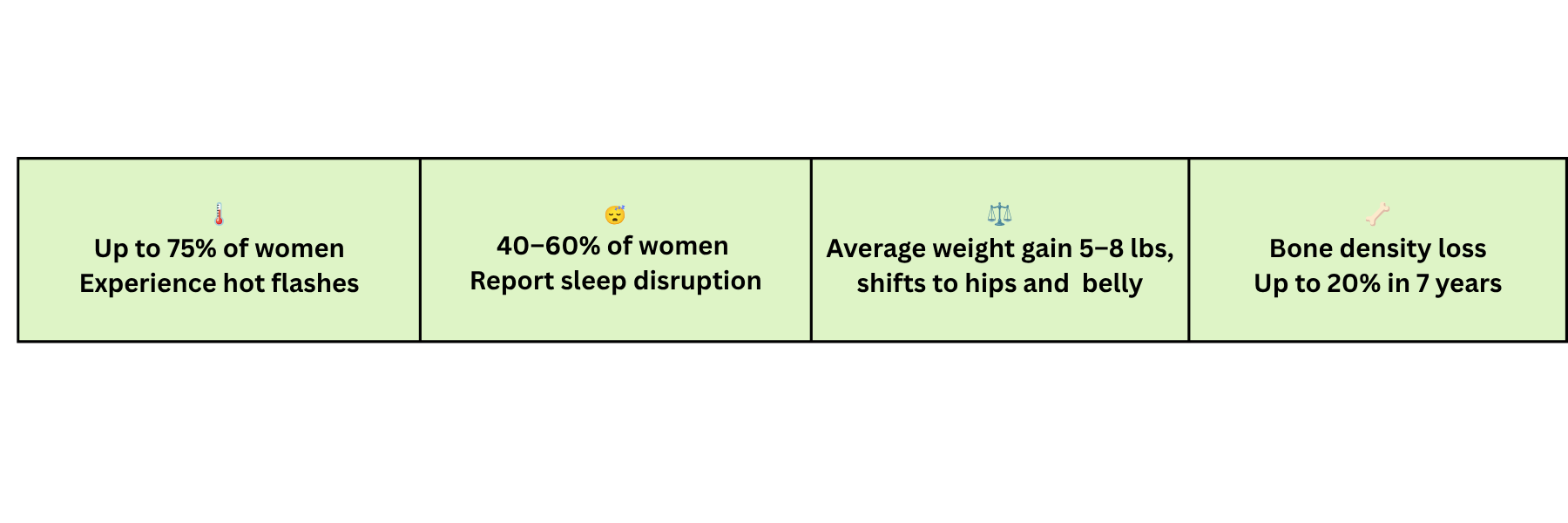
Hot flashes occur because declining estrogen narrows the hypothalamus’s tolerance band for body temperature — what researchers call the thermoneutral zone. The brain’s thermostat becomes hypersensitive. A warm room, a glass of wine, a moment of stress: any of these can trigger a full cooling alarm. Blood vessels dilate, heart rate increases, sweat glands fire. That is a hot flash. Night sweats are simply hot flashes during sleep.
The most well-studied dietary approach is increasing phytoestrogens — plant compounds that gently bind to estrogen receptors and produce a mild estrogen-like effect. Women who consume them regularly tend to report fewer and less intense hot flashes. Organic soy foods (tofu, tempeh, edamame, miso), ground flaxseed, and legumes are the three most accessible sources. One to two servings of soy or a tablespoon or two of ground flaxseed daily is a reasonable starting point.
Equally important: identifying your personal triggers. Alcohol, caffeine, spicy foods, and refined sugars are documented hot flash amplifiers for many women. A two-week trigger diary often reveals patterns that are surprisingly clear.
On the herbal side, several botanicals have meaningful clinical evidence:
Black Cohosh (Actaea racemosa)
The most extensively researched herb for hot flashes. Multiple trials show significant reduction in frequency and severity at 20–40 mg standardised extract twice daily.
Sage(Salvia officinalis)
A traditional European remedy with modern evidence — clinical trials have shown up to 64% reduction in hot flash intensity. Available as tea, tincture, or capsule.
Red Clover(Trifolium pratense)
Rich in isoflavones similar to soy. Meta-analyses show a modest but consistent reduction in hot flash frequency with regular supplementation.
Evening Primrose (Oenothera biennis)
Contains gamma-linolenic acid and may reduce the severity and duration of hot flashes, particularly at night.
And then there is breath. Research shows that slow diaphragmatic breathing — six breaths per minute, five counts in and five counts out — can reduce hot flash peak intensity by up to 50% when practiced at the onset of an episode. It sounds almost too simple to be true. It works.
The Fatigue Nobody Warns You About
There is ordinary tiredness, and then there is menopausal fatigue — the kind that doesn’t lift after a full night’s sleep, that makes ordinary demands feel monumental. It is one of the most reported and least discussed symptoms of the transition.
The reason it persists is that it rarely has a single cause. Night sweats create chronic sleep debt. Declining estrogen and progesterone reduce the production of serotonin and dopamine — the neurotransmitters that underpin motivation and energy. Cortisol reactivity increases, meaning the stress response fires more easily and takes longer to settle. And subclinical thyroid underfunction becomes more common after 40, dragging metabolic rate down with it.
The nutritional foundation for energy restoration is blood sugar stability. The hormonal changes of menopause make women more sensitive to glucose fluctuations — and that mid-afternoon energy crash is often a blood sugar crash. Pairing every meal with protein, healthy fat, and fibre moderates the peaks and troughs. The specific nutrients that matter most: iron (especially if periods have been heavy), B vitamins for energy metabolism, and magnesium for ATP production — the literal currency of cellular energy.
Adaptogens: recalibrating the stress response to improve energy
A class of herbs called adaptogens has particular relevance here. Unlike stimulants, they don’t override the stress response — they help normalise it. The most evidence-supported for menopausal fatigue: ashwagandha (KSM-66 extract, 300–600 mg daily) has shown measurable cortisol reduction and energy improvement in clinical trials; rhodiola rosea for physical and mental fatigue; maca root, which has demonstrated improvements in energy, mood, and libido specifically in menopausal women; and holy basil, which can be taken as a pleasant daily tea.
Perhaps the single most evidence-backed habit for energy: a 20-minute walk in morning sunlight. It anchors the circadian rhythm, triggers serotonin production, and provides a lift that often lasts for hours. If you could add only one practice from this entire article, let it be that one.
The Sleep You’re Losing — and How to Get It Back
Poor sleep during menopause isn’t simply inconvenient. It amplifies every other symptom: more hot flashes, worse mood, disrupted metabolism, impaired concentration. Restoring sleep quality is the foundation on which every other intervention rests.
Before any supplement will work optimally, the behavioural foundations need to be in place. A consistent sleep-wake schedule — including weekends — is the most powerful circadian regulator available. A bedroom kept between 65 and 67°F, genuine darkness (even small light sources suppress melatonin), and a screen curfew of 90 minutes before bed are the non-negotiables.
On the supplement side, magnesium glycinate (300–400 mg, one hour before bed) is the single most consistently useful option for menopausal sleep. It activates GABA receptors — the same receptors targeted by sleep medications — gently, and without dependency risk. Many women notice a meaningful difference within the first week. Paired with L-theanine (100–200 mg) for the racing mind, and valerian root with lemon balm as an herbal tea ritual, this combination addresses multiple sleep disruption pathways at once.
One commonly misunderstood point: melatonin dose matters. The 5 and 10 mg doses commonly sold are far higher than research supports — and high doses can paradoxically disrupt sleep architecture. The evidence-backed starting dose is 0.5 to 1 mg, taken 90 minutes before your target bedtime. Quality matters as well, so be sure that if you are going to try melatonin as a sleep aid, you have acess to a high quality liposomal supplement.
The Weight Shift — Why It Happens and What Actually Helps
The frustrating truth about menopausal weight changes is that they are real, physiological, and not simply about eating more or moving less. Declining estrogen removes the hormonal signal that directed fat storage toward the hips and thighs — and it redistributes to the abdomen, where visceral fat is metabolically active and associated with cardiovascular risk. Add a gradual loss of muscle mass, rising cortisol, and the disruption of hunger hormones caused by poor sleep, and the body’s composition can shift even without any change in diet or activity.
Understanding the mechanisms makes the solutions clear:
♦ Protein at every meal — not just dinner. 25–30g per meal preserves muscle mass, promotes satiety, and supports the hormones that regulate appetite.
♦ The Mediterranean dietary pattern is the most consistently studied for menopausal women — it addresses hot flashes, weight, bone density, and cardiovascular health simultaneously.
♦ Strength training 2–4 times per week is the most effective long-term tool for preserving the muscle that underpins metabolic rate.
♦ A 10-minute walk after meals significantly blunts the post-meal glucose spike — one of the most practical, evidence-backed habits you can add today.
♦ Cortisol management is also a necessary piece to look at for effective weight management. Chronic stress directly promotes abdominal fat storage through physiological pathways that willpower cannot override!
Aging Well: Skin, Bones, and the Long Game
Women lose up to 30% of skin collagen in the first five years after menopause. And up to 20% of bone density in the 5–7 years following their last period. These are not cosmetic statistics — bone loss in particular has profound long-term health implications. The good news: both respond to targeted, evidence-based intervention.
For skin, hydrolysed collagen peptides (10–15g daily, stirred into coffee or a smoothie) have demonstrated improvements in skin elasticity, hydration, and wrinkle depth in randomised controlled trials. Vitamin C is a necessary cofactor — the body cannot synthesize collagen without it.
For bone, the basics include calcium 1,200 mg daily (food first — leafy greens are the best, as well as sardines, legumes like lentils and chickpeas, and nuts and seeds including almonds, sesame and chia), vitamin D3 2,000–4,000 IU (test your baseline levels), vitamin K2 as MK-7 (90–120 mcg) which directs calcium into bones and away from arteries, and magnesium as a mineralisation cofactor. Paired with daily weight-bearing exercise — walking, dancing, strength training — all of which directly stimulate bone remodelling.
Don’t forget, though, that there are other mineral cofactors that help in the absorption and utilization of calcium, and help to build strong bones. One of those is magnesium, which most people are lacking. Others include silicon and boron in trace amounts. For more detailed information, be sure to check out the Complete Natural Menopause Relief Guide - free below!
FREE RESOURCE
Get the Complete Natural Menopause Relief Guide — Free
The full ebook covers every topic in this article in detail, with evidence summaries, herb safety tables, a master supplement reference, sample daily routines, and guidance on when to seek medical support.
Download the Free Ebook
A Note on When to Seek Medical Support
Natural strategies are powerful — and they have limits. Please consult a qualified healthcare professional if you experience hot flashes or night sweats so severe they significantly impair your quality of life; unexplained weight gain despite genuine dietary and lifestyle effort; persistent low mood, anxiety, or brain fog that doesn’t improve with lifestyle measures; vaginal dryness or painful intercourse (localised estrogen therapy is highly effective and low risk); or any unusual bleeding during perimenopause.
A note on hormone therapy worth making clearly: modern menopausal hormone therapy is considerably safer than its historical reputation — particularly when initiated within 10 years of menopause. For women with severe symptoms, it remains the most effective option and can work alongside the natural approaches described here. If you’ve been avoiding the conversation with your doctor, it may be worth revisiting it.